Permanent product Record

GORILLA MIND

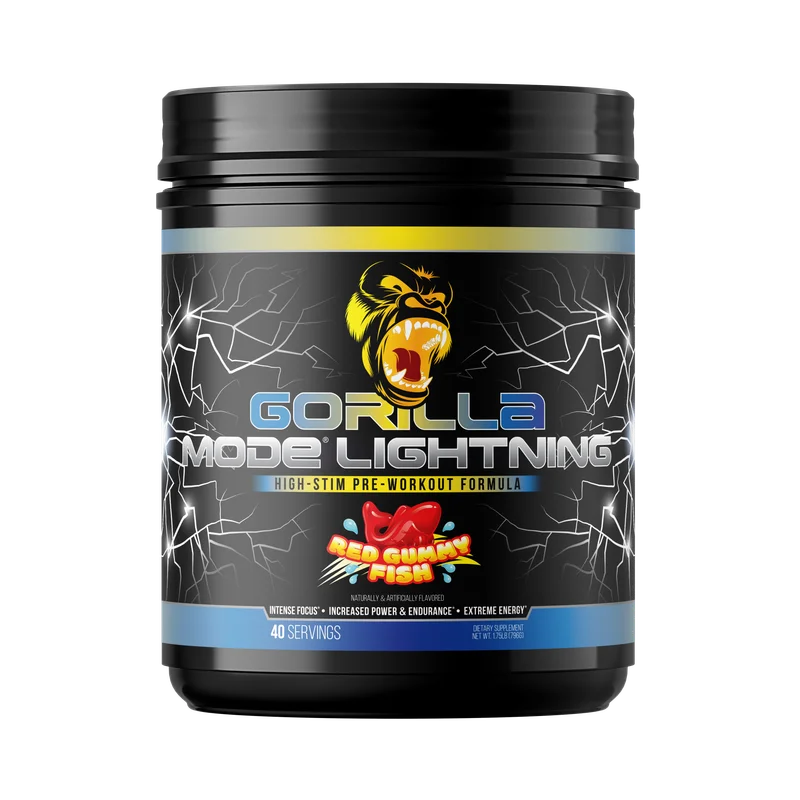
Gorilla Mode Lightning

CURRENTRecord last observed August 3, 2026

Gorilla Mind Gorilla Mode Lightning has a current Record. Last observed August 3, 2026. The current public formula contains 17 declared ingredient lines. Comparable formula history is not yet available.

Current Record

The current declared formula.

Printed label wording stays separate from FormulaSignal's normalized identity. Current formula observed August 3, 2026.

Serving size
Not recorded
Servings
Not recorded
Caffeine
Not computable from current evidence
Formula scope
FLAVOR SPECIFIC
Gorilla Mind Gorilla Mode Lightning, current declared formula observed August 3, 2026. Each row gives the printed label wording, the declared amount, and FormulaSignal's normalized identity.
Original label wordingDeclared amountNormalized identity
Niacin (as Niacinamide)16 mgniacin
Vitamin B6 (as Pyridoxal 5'-Phosphate)25 mgvitamin b6 as pyridoxal 5 -phosphate
Vitamin B12 (as Methylcobalamin)250 mcgvitamin b12
Magnesium (as Magnesium Bisglycinate)25 mgmagnesium as magnesium bisglycinate
Sodium200 mgsodium
Potassium (as Potassium Chloride)190 mgpotassium
L-Tyrosine6750 mgl-tyrosine
L-Citrulline4000 mgl-citrulline
Betaine Anhydrous2000 mgbetaine anhydrous
Malic Acid1500 mgmalic acid
Pink Himalayan Sea Salt500 mghimalayan rock salt
Synaptrix (Catuaba Extract 10:1 (Trichilia catigua) (bark))500 mgsynaptrix catuaba extract 10 1 trichilia catigua bark
Alpha-GPC 50% (L-alpha-glycerylphosphorylcholine)400 mgalpha-gpc 50% material
Caffeine Anhydrous200 mgcaffeine
Di-Caffeine Malate100 mgdicaffeine malate
Rauwolscine (Rauwolfia vomitoria Root Extract) (std. Min 90% Alpha Yohimbine)750 mcgrauwolscine rauwolfia vomitoria root extract std. min 90% alpha yohimbine
Huperzine A (Huperzia serrata leaf standardized extract)200 mcghuperzine a huperzia serrata leaf standardized extract

Serving economics

Facts and calculations stay labeled.

Captured commercial fact
Observed price, basis not established: $64.99
Price observation
August 3, 2026
Captured commercial serving count
40 servings per container
Deterministic calculation
$64.99 ÷ 40 = $1.62 per serving

Historical timeline

Comparable formula states.

Dates below are observation dates. They are not exact reformulation dates.

Historical formula evidence is not yet sufficient for a reliable comparison. This does not establish that the product never changed.

Confirmed Signals

Reviewed changes in the public Record.

No confirmed public Signal is associated with this product. This is not a claim that the product never changed.

Research-dose context

Selected evidence, not a universal effective dose.

These comparisons retain the studied protocol, source, and limitations. They do not establish safety, effectiveness, or a dose recommendation for this product.

A2

L-tyrosine

Product declaration
L-Tyrosine: 6750 mg
Selected studied range
2000 to 2000 mg
Protocol and duration
per day for five days, in the cadet study
Studied context
Studied as the dietary precursor to norepinephrine for mitigating cognitive performance decrements under acute stress. A 2015 Military Medicine evidence review (rapid evidence assessment, 14 trials: 10 RCTs + 4 controlled clinical trials) issued a "weak recommendation" in favor of tyrosine for cognitive stress specifically, stating "all studies showed a positive effect" on that outcome. A widely cited primary study (Deijen et al. 1999, Brain Research Bulletin) gave cadets 2 g tyrosine daily for five days during a combat training course and found better memory and tracking-task performance, plus lower systolic blood pressure, versus a carbohydrate control.
Limitations
The 2015 Military Medicine review states explicitly that "no recommendation could be made" for tyrosine's effect on physical performance under stressful physical conditions, and concludes "available evidence is insufficient to make confident recommendations on the effectiveness of tyrosine for mitigating stress effects on physical/cognitive performance" overall, despite the positive signal on cognition. A separate heat-stress study found tyrosine ingestion did not influence cognitive function or physical performance during exercise heat stress despite raised serum tyrosine. NIH ODS's exercise/athletic-performance fact sheet does not cover tyrosine at all.

Selected evidence: Deijen et al., Brain Research Bulletin, 1999

A1

L-citrulline

Product declaration
L-Citrulline: 4000 mg
Selected studied range
3000 to 9000 mg
Protocol and duration
per day, in the studies NIH ODS summarizes
Studied context
Studied as a nitric-oxide pathway precursor (converted to arginine via the urea cycle) for aerobic exercise performance measures such as oxygen-uptake (VO2) kinetics, blood lactate, and rate of perceived exertion, and for acute resistance-exercise performance and muscle oxygenation. NIH ODS describes evidence for enhancing performance as limited, with few studies and conflicting results.
Limitations
A 2022 systematic review/meta-analysis found no significant benefit for endurance-performance outcomes specifically. A single 8 g acute dose did not enhance isometric force production, muscle endurance, or muscle-oxygenation parameters in one resistance-exercise study. NIH ODS characterizes overall performance-enhancement evidence as limited.

Selected evidence: NIH ODS, Dietary Supplements for Exercise and Athletic Performance · Open source
A1

Betaine anhydrous

Product declaration
Betaine Anhydrous: 2000 mg
Selected studied range
2000 to 5000 mg
Protocol and duration
per day, studied for up to 15 days
Studied context
NIH ODS describes betaine as studied for strength- and power-based performance in bodybuilders and cyclists, with "potential but modest" improvements from a limited set of small, sometimes conflicting studies. A 2024/2025 systematic review focused specifically on endurance performance (VO2max, time-to-exhaustion, time-to-completion, power output).
Limitations
The endurance systematic review explicitly states "limited and inconclusive evidence regarding the definitive ergogenic effect of betaine supplementation on endurance exercise performance". Only 2 of 5 reviewed studies showed a significant improvement, and the authors call for "additional, more rigorous research."

Selected evidence: NIH ODS, Dietary Supplements for Exercise and Athletic Performance · Open source

Cautions and regulatory records

A filing and a documented risk are not the same thing.

These attach to declared ingredients, not to this product as a whole. Nothing here establishes that the product is safe or unsafe. Talk with a qualified health professional.

Documented cautions on declared ingredients

  • SAFETY ADVISORY · A2

    Alpha-GPC 50% material. This material is standardized to Alpha-GPC. A 2021 JAMA Network Open study of about 12 million adults reported an association between alpha-GPC use and 10-year stroke risk, in a dose and duration response pattern. The authors flag confounding, and association is not causation.

    Association of L-alpha Glycerylphosphorylcholine With Subsequent Stroke Risk After 10 Years, JAMA Network Open · Open source

Where the sources disagree

What we could not read cleanly.

A disagreement between sources is recorded rather than smoothed into one confident number. None of these is a Signal.

No source conflict is recorded on this Record. That is not a claim that every source agrees, only that none we read disagreed.

Evidence

Audit the material claims.

  • Gorilla Mind

    P1 current formula source · observed August 3, 2026 · accessed August 3, 2026

    Open source evidence
  • Gorilla Mind

    P1 commercial capture · observed August 3, 2026 · accessed August 3, 2026

    Open source evidence

Go deeper

Ask now, or keep watch.

No released consumer report is available for this product. Browse Reports.