Permanent product Record

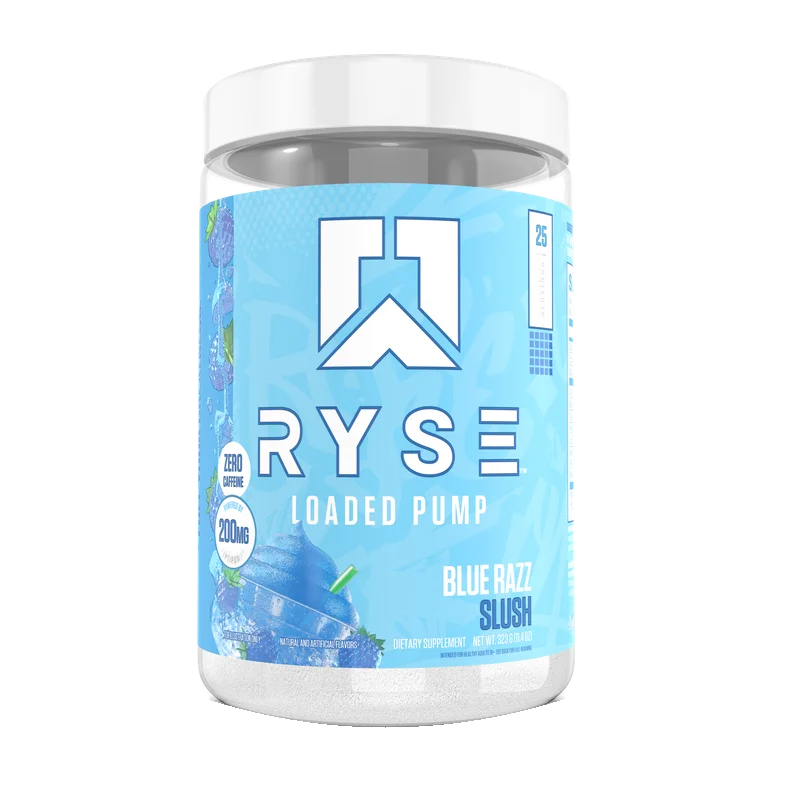
RYSE

Loaded Pump

CURRENTRecord last observed August 3, 2026

RYSE Loaded Pump has a current Record. Last observed August 3, 2026. The current public formula contains 6 declared ingredient lines. Comparable formula history is not yet available.

Current Record

The current declared formula.

Printed label wording stays separate from FormulaSignal's normalized identity. Current formula observed August 3, 2026.

Serving size
Not recorded
Servings
Not recorded
Caffeine
Not computable from current evidence
Formula scope
PRODUCT WIDE
RYSE Loaded Pump, current declared formula observed August 3, 2026. Each row gives the printed label wording, the declared amount, and FormulaSignal's normalized identity.
Original label wordingDeclared amountNormalized identity
Sodium (as Himalayan Pink Salt)140 mgsodium as himalayan pink salt
L-Citrulline4.5 gl-citrulline
Betaine Anhydrous2.5 gbetaine anhydrous
Taurine1 gtaurine
PeptiPump (Lentil (Lens culinaris) protein hydrolysate)200 mgpeptipump lentil lens culinaris protein hydrolysate
AstraGin (Astragalus membranaceus [Root] Extract & Panax Notoginseng [Root] Extract)50 mgastragin astragalus membranaceus root extract panax notoginseng root extract

Serving economics

Facts and calculations stay labeled.

Captured commercial fact
Observed price, basis not established: $34.99
Price observation
August 3, 2026
Captured commercial serving count
25 servings per container
Deterministic calculation
$34.99 ÷ 25 = $1.40 per serving

Historical timeline

Comparable formula states.

Dates below are observation dates. They are not exact reformulation dates.

Historical formula evidence is not yet sufficient for a reliable comparison. This does not establish that the product never changed.

Confirmed Signals

Reviewed changes in the public Record.

No confirmed public Signal is associated with this product. This is not a claim that the product never changed.

Research-dose context

Selected evidence, not a universal effective dose.

These comparisons retain the studied protocol, source, and limitations. They do not establish safety, effectiveness, or a dose recommendation for this product.

A1

L-citrulline

Product declaration
L-Citrulline: 4.5 g
Selected studied range
3000 to 9000 mg
Protocol and duration
per day, in the studies NIH ODS summarizes
Studied context
Studied as a nitric-oxide pathway precursor (converted to arginine via the urea cycle) for aerobic exercise performance measures such as oxygen-uptake (VO2) kinetics, blood lactate, and rate of perceived exertion, and for acute resistance-exercise performance and muscle oxygenation. NIH ODS describes evidence for enhancing performance as limited, with few studies and conflicting results.
Limitations
A 2022 systematic review/meta-analysis found no significant benefit for endurance-performance outcomes specifically. A single 8 g acute dose did not enhance isometric force production, muscle endurance, or muscle-oxygenation parameters in one resistance-exercise study. NIH ODS characterizes overall performance-enhancement evidence as limited.

Selected evidence: NIH ODS, Dietary Supplements for Exercise and Athletic Performance · Open source

A1

Betaine anhydrous

Product declaration
Betaine Anhydrous: 2.5 g
Selected studied range
2000 to 5000 mg
Protocol and duration
per day, studied for up to 15 days
Studied context
NIH ODS describes betaine as studied for strength- and power-based performance in bodybuilders and cyclists, with "potential but modest" improvements from a limited set of small, sometimes conflicting studies. A 2024/2025 systematic review focused specifically on endurance performance (VO2max, time-to-exhaustion, time-to-completion, power output).
Limitations
The endurance systematic review explicitly states "limited and inconclusive evidence regarding the definitive ergogenic effect of betaine supplementation on endurance exercise performance". Only 2 of 5 reviewed studies showed a significant improvement, and the authors call for "additional, more rigorous research."

Selected evidence: NIH ODS, Dietary Supplements for Exercise and Athletic Performance · Open source

A2

Taurine

Product declaration
Taurine: 1 g
Selected studied range
1000 to 3000 mg
Protocol and duration
per day, acutely across 6 to 15 days
Studied context
Studied for aerobic performance (VO2max, time-to-exhaustion, time-trial performance), anaerobic/strength performance, exercise-induced muscle damage, and recovery. A 2018 review ("Taurine in sports and exercise," PMC8152067) reports small-to-moderate improvements across several of these outcomes in some studies.
Limitations
The 2018 review states plainly: "limited and varied findings prohibit definitive conclusions regarding the efficacy of taurine on aerobic and anaerobic performance," and separately notes no peer-reviewed evidence exists for an independent role of taurine in skeletal-muscle hypertrophy.

Selected evidence: Taurine in sports and exercise, 2018 · Open source
Cautions and regulatory records

A filing and a documented risk are not the same thing.

These attach to declared ingredients, not to this product as a whole. Nothing here establishes that the product is safe or unsafe. Talk with a qualified health professional.

No documented caution is recorded against the declared ingredients on this Record. That is not a finding that the product is safe.

Where the sources disagree

What we could not read cleanly.

A disagreement between sources is recorded rather than smoothed into one confident number. None of these is a Signal.

No source conflict is recorded on this Record. That is not a claim that every source agrees, only that none we read disagreed.

Evidence

Audit the material claims.

  • RYSE

    P1 current formula source · observed August 3, 2026 · accessed August 3, 2026

    Open source evidence
  • RYSE

    P1 commercial capture · observed August 3, 2026 · accessed August 3, 2026

    Open source evidence

Go deeper

Ask now, or keep watch.

No released consumer report is available for this product. Browse Reports.